
Insights
Articles
4 January 2026
7 min read
Before You Gift Tech This Christmas: Here’s What’s Really Behind Smart Devices.
Praise Ohans
Author
Introduction
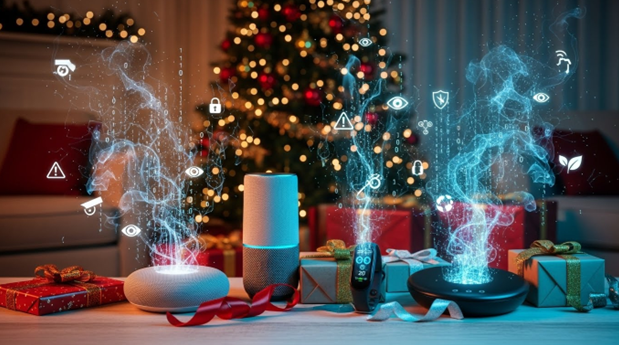
Smart gadgets are the go-to IT Christmas gifts in 2025. Voice assistants, fitness trackers, smart speakers, and AI-enabled home devices top holiday tech gift ideas everywhere. The reason they are a popular choice is down to the convenience and “wow” factor they give off when someone unboxes something that is deemed futuristic. However, it is important to note that the real cost isn’t just what’s written on the price tag.
Behind the amazing features is a plethora of hidden trade-offs that every shopper should know before buying tech gifts this holiday season. These gadgets are data collectors, potential security weak spots, and contributors to significant environmental impact. With these products, you’re also inviting privacy risks, and sustainability concerns into someone’s life.
In the sections that follow, we’ll explain each of these factors, starting with the data these devices quietly steal, and how it impacts smart device privacy.
Smart Devices Are Data Collectors
When it comes to data collection by smart devices, these devices marketed as essential smart home technology are powerful data collectors. A Surfshark study analyzing 290 smart home apps found that one in ten actively collects user data specifically for tracking purposes. Amazon’s Alexa stands out as the most data-hungry of them all, gathering 28 out of 32 possible data points, more than three times the average smart device. These data points include precise location, contact information, photos, videos, and even health-related data.
What this means is that a voice-activated assistant aside from simply waiting to respond to commands is also constantly learning about you.
Google’s smart devices are not far behind, collecting 22 out of 32 data points. Even devices that seem harmless, such as smart air fryers and smart thermostats, have been found requesting permissions that go far beyond what is necessary for their core purpose, such as precise location tracking, and audio recording.
Smart devices generate comprehensive digital footprints that build detailed profiles of users’ habits, preferences, and routines. This data is rarely stored only on the device itself. Instead, it is frequently transmitted to external servers where it may be analyzed to improve products, used to personalize services, fed into targeted advertising systems, or shared with third-party partners for marketing and profiling purposes. Even the beloved smart watches have been reported demanding nine “risky” permissions during setup.
Before gifting smart tech this Christmas, it is important to understand what is really being exchanged. The permissions these smart devices request from you introduce a channel that is capable of extracting personal data, intensifying smart home privacy concerns, and supporting an ecosystem that profits from knowing far more about a person’s digital life than they may ever realize.
Where Does Your Data Go?
Once smart devices collect personal data, it most times transmit this user information back to manufacturer servers for processing, storage, and analysis. Research shows that over 80% of smart devices are built specifically to send collected data to the companies that make them. This data is often framed as necessary for improving performance, enabling personalization, or fixing bugs, but that explanation only covers part of the picture. In reality, manufacturer servers act as central hubs where massive volumes of user data are aggregated. From there, information may be analyzed to refine products, but it can also be shared with advertising partners, analytics firms, and other third parties.
Public concern about this practice is high, yet awareness remains low. A Pew Center study found that 60% of Americans feel uneasy about how companies use their personal data. Despite this concern, only one in five people actually read privacy policies before agreeing to them. These documents are often long, complex, and written in legal language that discourages careful review, making it easy for extensive data sharing practices to go unnoticed. Information flows can include audio recordings, location history, usage patterns, and behavioral data tied directly to individuals. The cost of smart devices extends beyond the initial purchase. Consumers often pay twice: once with money, and again with personal information.
Your Home Network Is a Soft Target
Beyond privacy risks, smart devices introduce security vulnerabilities into home networks. According to the 2024 IoT Security Report, an analysis of 50 million devices revealed that the average home network faces around ten attacks every single day. Even more concerning is the fact that 99.3% of IoT attacks exploit vulnerabilities that are already known, and 68% are classified at the highest severity level.
Smart TVs, smart plugs, and digital video recorders recorded the highest number of vulnerabilities in 2023. Unlike smartphones and computers, which receive frequent updates and security patches, many IoT devices operate for years with minimal updates. Several factors make smart devices especially vulnerable. Many lack the processing power needed to support robust security features. Nearly half do not receive regular firmware updates, and many ship with default passwords or weak encryption settings that users never change. Once compromised, these devices can act as entry points into entire home networks, exposing everything connected to them.
The Environmental Cost
The environmental impact of smart devices is rarely mentioned in product ads or holiday gift recommendation posts, yet it is one of the most significant costs hidden behind modern technology. Life-cycle assessments reveal that between 70 and 80% of a smartphone’s total carbon emissions occur during production, long before the device is even switched on. This means the environmental damage is largely front-loaded, baked into the product before it reaches the consumer.
Manufacturing smart devices is energy-demanding and resource-heavy. Producing one ton of laptops can generate up to ten tons of carbon dioxide emissions. The production process depends on rare earth metals such as cobalt, tungsten, and gold, which require extensive mining operations that often result in land degradation, water pollution, and high carbon output.
There is also the problem of electronic waste. E-waste is now the fastest-growing waste stream in the world, with approximately 53.6 million metric tons generated every year. Despite this, only about 20% of this waste is properly recycled. The remaining 80 percent ends up in landfills or informal recycling operations, where toxic substances leak into soil and water systems. This waste, asides being an environmental harm, also reflects a massive economic loss. Discarded electronics contain an estimated $57 billion worth of recoverable materials annually, including rare earth elements that are increasingly difficult and expensive to extract.
How to Gift Smarter This Holiday Season
Gifting smart technology does not have to mean ignoring privacy, security, or environmental responsibility. While embracing innovation, one must approach it with awareness and intention, especially during the Christmas shopping season.
Privacy-First Buying and Setup Habits
A smarter approach to smart device privacy starts before a product is even purchased. Understanding what data a device collects, how it is used, and whether it is shared with third parties can significantly reduce long-term risk. Review privacy settings immediately upon setup, don't just accept defaults Features such as microphones, cameras, or location tracking that are not essential to daily use can often be disabled, reducing unnecessary data exposure while still preserving core functionality.
Basic Security Hygiene for Smart Devices
Security risks grow when smart devices are simply set up and abandoned. Changing default passwords immediately after installation is one of the simplest and most effective defenses. Where available, multi-factor authentication adds another layer of protection against unauthorized access. Firmware updates matter as much as software updates on phones or computers, yet many devices require manual checks. Placing smart devices thoughtfully within the home also helps limit exposure, particularly in areas where private conversations or sensitive activities occur.
Environmentally Responsible Purchasing and Disposal Choices
Sustainability starts with buying less and using devices longer. Choosing refurbished or second-hand smart devices can significantly reduce carbon emissions, as extending a smartphone’s lifespan by just one year has been shown to save as much carbon as removing millions of cars from the road. Energy-efficient products with recognized certifications consume less power over time, lowering both environmental impact and energy costs.
Conclusion
Smart technology when designed and used well can genuinely improve convenience, efficiency, and quality of life. The problem is not the technology itself, but how little attention is paid to its vulnerabilities. Data collection, security vulnerabilities, and environmental impact are rarely part of what is advertized, yet they define the long-term cost of every smart device we bring into our homes.
As we move toward 2026, regulations around data protection, IoT security, and sustainability are slowly evolving, but policy alone cannot close the gap. Awareness remains the most effective defense for consumers. In this festive season, understanding how smart devices collect data, where that data goes, how secure the devices are, and what their environmental impact looks like allows people to make better, and more intentional choices.
TAGS:


Build what matters, with Gozade
Let's Talk

Gozade
3rd Floor, 86-90 Paul Street, London, England, United Kingdom, EC2A 4NE
HOUSE NO. 33C, ROAD 2, IKOTA VILLA ESTATE, IKOTA, LEKKI, LAGOS
+2349032770671, +2349032942619
Gozade builds smart digital solutions that help businesses grow and scale with confidence.